Page 1 of 2
Elves, dorfs, humans don't have 'nuff meaningful distinction
Posted: Wed Feb 26, 2014 8:02 am
by OgreBattle
Would there be any great loss to your general Dee n Dee setting like Forgotten Realms if you just declared they're the same race, just that one tends to be skinny and the other really likes beards? Heck, pointy ears could just be a trait of some of them from a certain magically inclined region. The extended lifespans of dorfs and elves don't add much for me, if anything it just makes them look retarded when a 40 year old beardguy and 130 year old pointy ears is equal to a plucky 18 year old farmhuman who finally had it with those orcs wrecking his stuff.
Like Legend of Zelda, everyone is referred to as human, but humans from Hyrule have pointy ears:
(I also like how Conan does it, the cultural difference between an Aquilonian vs Zingaran vs Hyrkanian are distinct, but they're still all human.)
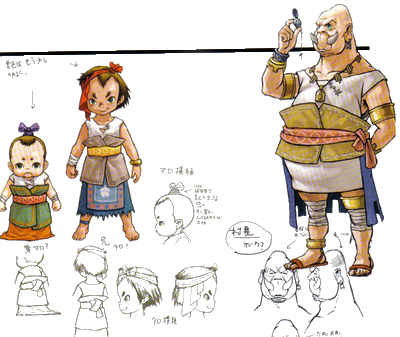
Non-Hylian humans
A Hylian Human

A Gerudo human, almost all female they kidnap other humans for their seed.
Fallout had a nice way of just saying "Being a skinny agile guy is a trait a human can take". Any piddly +/- stat change could just be represented by such traits to take.... or you ignore it and stat distribution is your justification of why your human is 4ft tall and 4ft wide with a 4ft beard.
Say if it was for D&D, then the "extra feat humans can take for being human" would be what you can consume to pick up the "you're a human from a highly magical society... which tends to have pointy ears" feat.
If something's going to be a separate race/species, they should feel significantly different. Lizardmen & snake people, bee girls & beetledudes, birdmen, robots, that's the kind of distinction I'd want for a not-human PC race.
Elves and dwarves are fantasy staples nowadays, but I figure if you had characters who LOOK like elves and dwarves its enough to appease the fans without calling them elves and dwarves and live for centuries.
Posted: Wed Feb 26, 2014 12:02 pm
by hogarth
Having thousand-year-old elves is a terrible idea for D&D. In real life, something that happened 3000 years ago is truly ancient history, but in D&D that's "when my grandpa was a kid" (okay, not quite), which has always seemed silly to me.
Posted: Wed Feb 26, 2014 12:46 pm
by Ghremdal
Cultures who's people can live 1000's of years don't make any sense in any historical context, and few sense in a fantasy land. They should be really really weird. Imagine the level of procrastination (if sufficient magic/tech is available for them to live comfortably).
Also I'm not sure that different races of demihumans can actually exist at the same time (races as in they can't interbreed), at least outside of a points of light setting (where there is a bigger threat) or a all out war between the races (40 K style).
If they can interbreed, then it is logical to have different races that are actually different cultures. No one cares that the one is short and stunty and the other is pointyeared. Its pretty much the same difference if one lives in togas and bathes regularly and the other lives in a snow hut and subsists on whale blubber.
Posted: Wed Feb 26, 2014 1:05 pm
by ishy
Linking race to certain cultural aspects quickly becomes very stupid though.
Say you have a race with dark vision, it makes sense if that changes the way they approach certain things.
But just like humans won't have a single culture, to have a culture devoted to pure logic or something is just stupid.
Posted: Wed Feb 26, 2014 1:16 pm
by Cyberzombie
hogarth wrote:Having thousand-year-old elves is a terrible idea for D&D. In real life, something that happened 3000 years ago is truly ancient history, but in D&D that's "when my grandpa was a kid" (okay, not quite), which has always seemed silly to me.
I always assumed that sort of thing was what fantasy was all about. Also just because you've lived 600 years doesn't mean you remember everything well. Human memories lose a lot in just 5 years, imagine trying to remember something that happened 250 years ago.
Posted: Wed Feb 26, 2014 1:29 pm
by Darth Rabbitt
Tingle and the fucking horrifying looking people from Twilight Princess are not "humans," they are hideous, evil monstrosities. I seriously cannot think of a word to properly state how fucked up they look.
I agree with your general point though, at least as far that races should be more distinct than "forehead alien."
Posted: Wed Feb 26, 2014 2:27 pm
by RadiantPhoenix
- Declare the main humanoid races to be races, as opposed to species.
- Your character can nominally be any mix of the races, but you have to pick one set of stats.
- Maybe do something mechanically so you can mix culture the culture of one race and biology of another.
Posted: Wed Feb 26, 2014 2:31 pm
by TheNotoriousAMP
Cyberzombie wrote:hogarth wrote:Having thousand-year-old elves is a terrible idea for D&D. In real life, something that happened 3000 years ago is truly ancient history, but in D&D that's "when my grandpa was a kid" (okay, not quite), which has always seemed silly to me.
I always assumed that sort of thing was what fantasy was all about. Also just because you've lived 600 years doesn't mean you remember everything well. Human memories lose a lot in just 5 years, imagine trying to remember something that happened 250 years ago.
Not to mention the enormous problem of inbreeding it would cause. If marriage is strong within such a long lived culture, than that's basically 600 years of kids with the same genetic make up. The only way to avoid this would basically be forcing couples to take new partners every block of time or so, so there's more sets of different genetic pairs.
Posted: Wed Feb 26, 2014 3:46 pm
by Cyberzombie
TheNotoriousAMP wrote:
Not to mention the enormous problem of inbreeding it would cause. If marriage is strong within such a long lived culture, than that's basically 600 years of kids with the same genetic make up. The only way to avoid this would basically be forcing couples to take new partners every block of time or so, so there's more sets of different genetic pairs.
There are ways to get around that too, depending on how you want to handle it. Elven DNA could just be crazy diverse, or for whatever reason, it could be immune to the inbreeding problem in humans. Being it's a fantasy game and not particularly sci-fi, you don't actually have to explain why elves are immune to those problems, you can just say they are if you don't want inbred elves.
Or if you wanted to, you could perhaps actually have inbreeding be a real problem among elves. In LotR, I think orcs are supposedly corrupted elves, which you could easily adapt to just mean inbred elves. And of course, elves knowing this have taken special measures to try to address inbreeding problems.
Personally, I think explaining those issues is part of the fun of a fantasy game and helps in fleshing out the races.
Posted: Wed Feb 26, 2014 5:33 pm
by fectin
Inbreeding isn't inherently bad, it's just that any recessive traits are much more likely to get expressed. If elves are insular enough, then they may have solved this via rigorous eugenics programs (which could also explain why elves are recognized as adults so late - that way they stay eligible for abortions much longer).
Posted: Wed Feb 26, 2014 6:10 pm
by Sakuya Izayoi
I appreciate TBZ's approach, but it only really works for its style of point-buy character creation.
Basically, the first step of character creation is combining archetypes, like mercenary, samurai, ninja, etc. If you're one of the inhuman races (oni, golem, youkai, dickworm, etc), that's an archetype as well, one that significantly alters your being. So it's sort of like if multiclassing was in the same edition of D&D where race was a class.
An issue D&D has with this as well is that its the game that requires zero setting buy-in to start playing. With Vampire, you go in accepting that vampires work a certain way, and that the clans that exist, and their internal politics, has been predetermined before character creation. Something like D&D, part of the appeal is that someone who's done something as simple as seen the LOTR movies or played World of Warcraft already knows what an elf and a dwarf is. If the GM has invented their own world but used those elements, you don't have to be taught about them beforehand, and they might even do some bottom-up worldbuilding around your character, if they're interesting enough.
Posted: Wed Feb 26, 2014 6:11 pm
by NineInchNall
Other possibilities:
- Elves might also only be fertile during a short period after their adolescence.
- Elves might only be able to produce X offspring ever, where X is really small.
- Elves might be unable to breed successfully at all with those whose genetic makeup is sufficiently close. They end up being more like Mass Effect's asari, without the silly monosex/monogender stuff, gettin' their pointy eared thang on with other races.
- Elves totally have the inbreeding problem, but their society is quick to detect genetic anomalies via magic, and they implement a rather Spartan solution.
Posted: Wed Feb 26, 2014 7:38 pm
by Scrivener
Why does this feel like trying to call a flaw a feature?
I get the problem- Metahumans might as well be humans
But the solution- Fuck it, they are humans now, seems half assed and pointless.
Verisimilitude isn't changed, if you can buy a race of pygmies who have thick luscious beards, why can't you accept dwarves? The problem still exists, all of the metatypes act like average joes. What is gained by relabeling?
There are very few examples in media of truly alien other species. The vlad taltos novels do a good job of explaining how elves in a high magic world act, and does a good job of making them subtlety alien. There are a few sci-fi books that have the "true alien" as the center piece, but most have cultural quirks and might as well be from some island nation where they do things strangely.
The big problem is if the story isn't "WTF are elves and how can we live with them?" Then everyone has figures out how to live with elves. So the cultural understanding isn't new, when elves forget your name and can't place your gender it isn't an issue, elves do that, people live with them why mention it constantly? When the halfling files his teeth after dinner people don't stare, they are used to this, that is how halflings work.
I personally have my arbitrary things that different races do that are not human, it isn't the focus ever because the story isn't about integrating the kingdom, or first contact with dwarves. If you want to highlight cultural and societal differences make a game to do so, don't try to solve your problems with a term change.
One last thought, do you get upset that humans from different parts of the world speak "common" and are roughly the same culturally?
Posted: Wed Feb 26, 2014 8:39 pm
by silva
As always, anything D&D tries to implement thats not directly related to dungeons or combat is inherently shallow and artificial. And races are not an exception. If you want to see "races" with meaningful distinction, look at games like The One Ring, Pendragon, Runequest, Jorune, Talislanta, etc.
In fact, chances are ANYTHING non-D&D will possibly have more meaningful races/cultures/ethnicities.

Posted: Wed Feb 26, 2014 9:51 pm
by fectin
Really? How would you contrast DnD's characterization of, say, Imaskari with The One Ring's characterization of Bardings?
Posted: Wed Feb 26, 2014 10:23 pm
by RadiantPhoenix
Who and who?
Posted: Wed Feb 26, 2014 10:48 pm
by Scrivener
silva wrote:As always, anything D&D tries to implement thats not directly related to dungeons or combat is inherently shallow and artificial. And races are not an exception. If you want to see "races" with meaningful distinction, look at games like The One Ring, Pendragon, Runequest, Jorune, Talislanta, etc.
In fact, chances are ANYTHING non-D&D will possibly have more meaningful races/cultures/ethnicities.
Just to be sure, you are saying that the system with giant intelligent death ducks is less shallow and artificial than D&D.
Posted: Wed Feb 26, 2014 11:04 pm
by silva
fectin wrote:Really? How would you contrast DnD's characterization of, say, Imaskari with The One Ring's characterization of Bardings?
D&D characterization of any race (Imaskari or whatever) is restricted to being a stat-block for combat encounters with little or no meaning outside of that. And even then its meaning is arguablly light, with just a feat like infravision here or a bonus to some saves there, etc.
The One Ring races (Bardings or whatever) have a huge impact on your character, defining your available professions, backgrounds, cultural virtues, standard of living, personal calling, starting gear, etc. and, by virtue of the very system, also affects aspects beyond combat, like the Brotherhood and Travel phases.
(and The One Ring isnt even among the better games on that list to give weight to races and cultures, I would say Pendragon and Runequest are much stronger in this )
Scrievener wrote:Just to be sure, you are saying that the system with giant intelligent death ducks is less shallow and artificial than D&D the game with intelligent talking Hippos
Yes, exactly.
Posted: Wed Feb 26, 2014 11:33 pm
by Chamomile
RadiantPhoenix wrote:Who and who?
Bardings are the race of people who follow King Bard in Middle-Earth. Hobbit spoilers: Bard becomes king of Dale at the end of the third movie. Or, given how long the epilogue on the Return of the King move was, probably in the middle of the third movie. The One Ring is probably the best Middle-Earth roleplaying system yet produced (which is, granted, not
too difficult an achievement) and takes place principally in the northeastern quadrant of Middle-Earth, and therefore includes Bardings and Mirkwood Elves and the like as its primary protagonists. And we've been waiting on expansions covering other regions for
years and still have nothing. All of my sad.
Google informs me that the Imaskari are the people of an ancient empire in the Forgotten Realms.
Posted: Thu Feb 27, 2014 12:15 am
by silva
scrievener wrote:One last thought, do you get upset that humans from different parts of the world speak "common" and are roughly the same culturally?
I would if I played D&D in Forgotten Realms (or any other setting that uses the concept). Luckly for me, I dont play neither.
Posted: Thu Feb 27, 2014 1:47 am
by talozin
silva wrote:
D&D characterization of any race (Imaskari or whatever) is restricted to being a stat-block for combat encounters with little or no meaning outside of that. And even then its meaning is arguablly light, with just a feat like infravision here or a bonus to some saves there, etc.
I found the Deep Imaskari interesting enough to adapt them for play in a stats-light non-D&D game, so I think you may be giving D&D characterization short shrift. Yes, the writeups in the PHB are pretty sparse, but apples to oranges here: the PHB is a generic toolkit. Having extremely detailed cultural writeups would actually detract from its main mission -- compare with RuneQuest, which is portraying a world and not making any pretensions to genericism. (Unless you count the Fantasy Earth stuff in the Avalon Hill editions, I suppose.)
(and The One Ring isnt even among the better games on that list to give weight to races and cultures, I would say Pendragon and Runequest are much stronger in this )
Are you sure Pendragon is the example you want to use here? Pendragon cultures are heavily based around what skills you get, what equipment you get, what cultural bonuses or penalties you get, etc. The text-based blurb telling you what it's like to be an Occitanian is about one third of a page. If you knew nothing whatsoever about Provencal culture except what you read in the Pendragon book, you would be pretty damned ignorant. I wouldn't rate their cultural writeups significantly higher than the packages human cultures in the FRCS book for 3.0.
Posted: Thu Feb 27, 2014 1:49 am
by fectin
silva wrote:The One Ring races (Bardings or whatever) have a huge impact on your character, defining your available professions, backgrounds, cultural virtues, standard of living, personal calling, starting gear, etc. and, by virtue of the very system, also affects aspects beyond combat, like the Brotherhood and Travel phases.
Great, except the actual settings for DnD (like Forgotten Realms) cover that too. Even with obscure, poorly fleshed-out races like the Imaskari, let alone major things like Waterdavians.
Posted: Thu Feb 27, 2014 8:36 am
by OgreBattle
Scrivener wrote:Why does this feel like trying to call a flaw a feature?
I get the problem- Metahumans might as well be humans
But the solution- Fuck it, they are humans now, seems half assed and pointless.
Verisimilitude isn't changed, if you can buy a race of pygmies who have thick luscious beards, why can't you accept dwarves? The problem still exists, all of the metatypes act like average joes. What is gained by relabeling?
People like the concept of surly stout miners and haughty magic kingdoms, so they should still have a way of playing them. I used Legend of Zelda as an example because the Hyrulians are quite elfy in appearance and fans of the series do sometimes just say Link's an elf, but in-setting they're still humans. The core of my fantasy experience is also 90's console RPG's and manga, so I'm also used to seeing humans come in all shapes and sizes and still be called human.
I can accept elves and dwarves as they are (Final Fantasy XI had a neat take on their Elves... but longevity wasn't one of their traits), I'm just thinking out loud about how I'd do my own setting. I like bug people*, so for my fantasy heartbreaker setting the elf-dorf-human design space is consolidated to make room for bug people, lizard folks, and perhaps robots too.
One last thought, do you get upset that humans from different parts of the world speak "common" and are roughly the same culturally?
I like that in Conan's world, being multilingual is kinda expected of a traveling adventurer sort. In Ancient History's game our mutual language is Stygian 'cause it takes place around Stygia.
*this is mostly a vessel for my bee-girl infatuation

Posted: Thu Feb 27, 2014 4:11 pm
by Surgo
Why is the OP written in baby talk?
Re: Elves, dorfs, humans don't have 'nuff meaningful distinction
Posted: Thu Feb 27, 2014 6:10 pm
by shadzar
OgreBattle wrote:Would there be any great loss to your general Dee n Dee setting like Forgotten Realms if you just declared they're the same race, just that one tends to be skinny and the other really likes beards?
why not jsut play all humans and not have any stats for or names for anything else then?
D&D is design first as human-centric anyway.
the other races give people a little something different while still being close enough human to explore other things, things they do not see humans as capable of as a whole. elves and their well built society, dwarves and their excessive drinking with no consequences, orcs and their murderous tendencies without regard for anything when they do it...
the other humanoids races are all just sides of humanity to explore put into another body so people don't look at them as human analogs so they can play the themes in a way that isnt shocking.
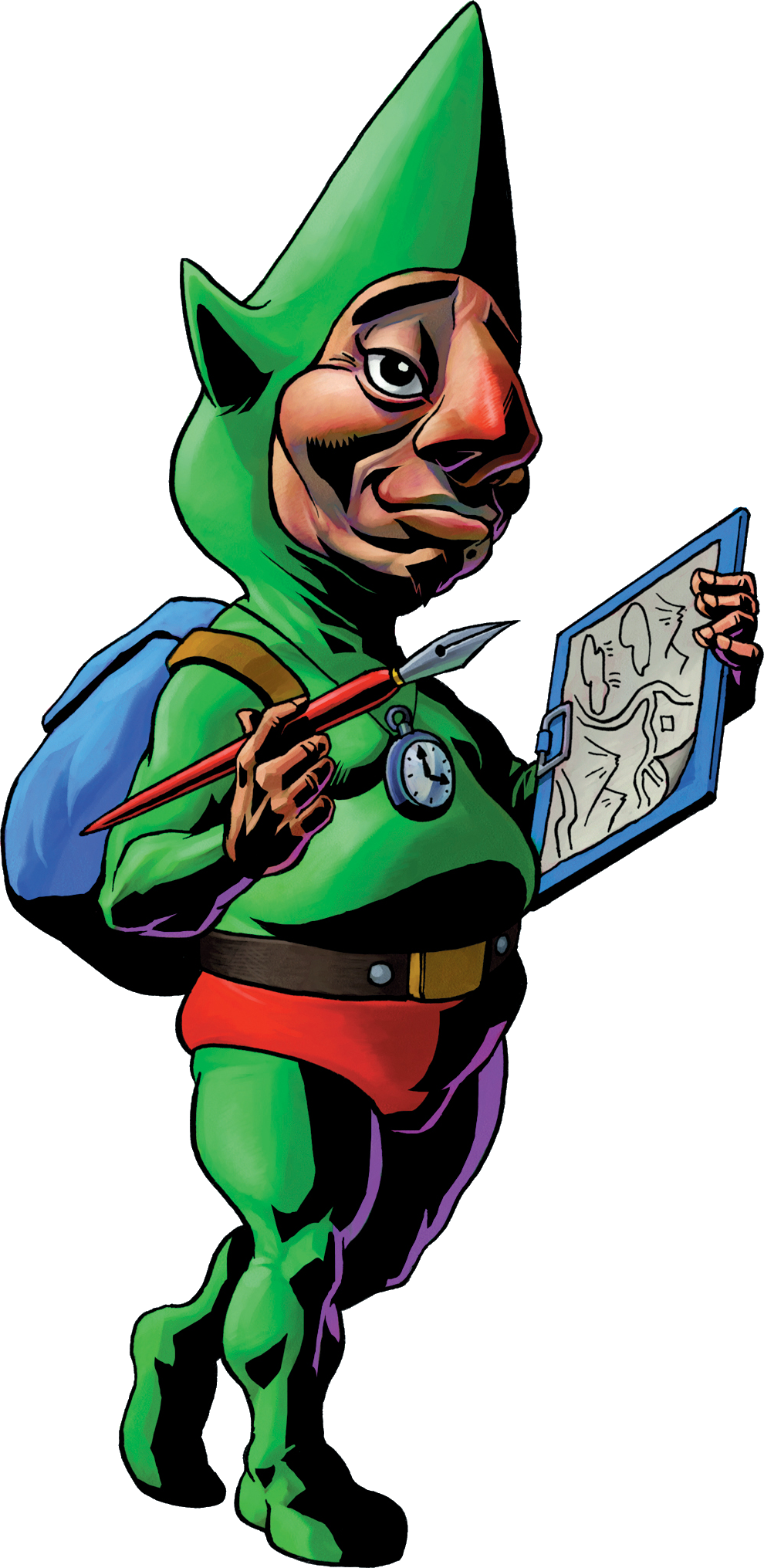 A Hylian Human